Tuesday, June 12, 2018

Hilly Region of NEPAL

The Hilly region is situated in the central part of the country.
The Hilly region is situated in the central part of the country. It spreads from Mechi in the east to Mahakali in the west. It has high hills and rocks. There are certain valleys surrounded by hills from all sides. Kathamndu, Phkhara, Surkhet, Dang-Deokhuri, etc. are such valleys. The hilly region lies at a fairly high altitude. So this region has a moderate type of climate. It is neither too cold, nor too hot. There is heavy rainfall from June to September. It also receives winter rain. Moreover, Pokhara valley gets the heaviest rainfall in Nepal.

SOCIAL LIFE

Food: Rice is the main food of the people of this region. Some people also eat bread. They eat meat, eggs, milk, curd, butter, ghee, etc. which they get from domestic animals.

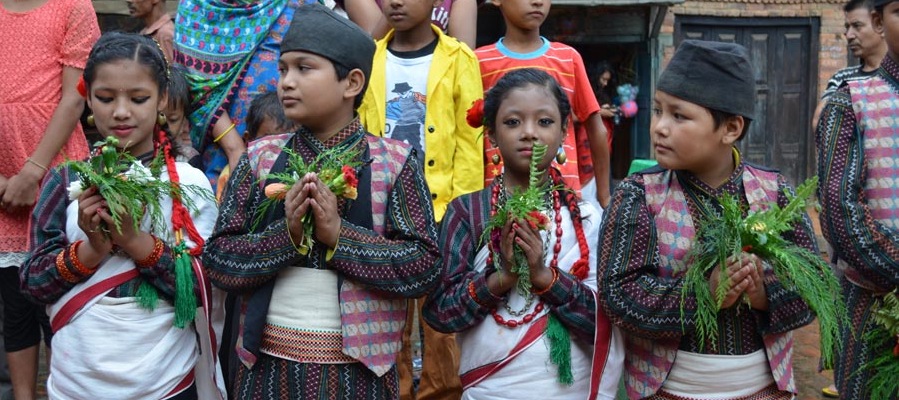
Costume: Male members wear Daura, Suruwal, coat and cap, female members wear cholo, fariya and patuka. Men in the town areas wear pants, shirt and coat, and women wear sari and blouse.

Housing: Most of the houses in this region are made of stone and clay. They have thatched roofs. There are single-storey houses. In the town areas, multi-storey buildings are also seen.

Health: Government has established Health Centres and Health Posts in various places of this region. In the town areas, there are many big hospitals. Kathmandu, the capital of the country, has many large hospitals. Patients from all over the country come to benefit themselves of the treatment available in the capital town.
Education: The hilly region is the centre of education in the country. The centres of education are: Kathmandu, Pokhara, Tansen, Dhankuta, Birendranagar, Banepa, etc. There are many Primary and Secondary Higher Secondary Schools, Campuses and Universities in this region.

ECONOMIC LIFE
Agriculture: Agriculture is the main occupation of the people living in this region. They cultivate maize, wheat, rice, millet, soyabeans, etc. Rice and wheat cultivated in the valleys and river basins. Other crops are cultivated in the hills. The people also rear domestic animals and grow fruits and vegetables.

Industry: Many industries are set up in this region. There are cement, bricks and tiles, textile, biscuit, leather and shoes, beer and wine and other industries in the Hilly region. In addition to these industries, there are Industrial Estates in Balaju, Patan, Bhaktapur and Pokhara. There are various cottage and small-scale industries as well.

Trade: In this region, some people earn their living from trade and business. Kathmandu is the centre of trade and business. Other business centres are Dhankuta, Pokhara, Tansen, Ghorahi, Surkhet, etc.
Some Important Places in the Hilly Region

Kathmandu (Kantipur): It is the capital and the biggest city of the country. It is in the Kathmandu district of the Bagmati Zone. The Parliament and head offices of all offices are located here. Basantapur palace is another important place for its Hanuman Dhoka and the ‘Kasthamandup’ from which the name Kathmandu is derived. The holy place of Hindus-the temple of Pashupatinath is in Kathmandu. Swayambhunath, the sacred place of Buddhist pilgrims is also in Kathmandu. It is the treasure house of Nepalese art, culture, history and traditions.

Bhaktapur (Bhadgaon): Bhadgaon is the ancient name of modern Bhaktapur. It is to the east of Kathmandu. It is in Bhaktapur district of Bagmati zone. It is one of the oldest and the third biggest town in the valley. It is famous for Nepalese art and architecture. Nyatapol, the temples of Bhairavnath and Dattatraya are some of its most attractive objects. The main occupations of the people of Bhaktapur are agriculture and trade. The people are expert in weaving. The black caps prepared here are known all over the country by the name Bhadgaunle Topi (Bhadgaon’s Cap). The people of this town are expert in making earthen pots.

Patan (Lalitpur): It is located in the Lalitpur district of Bagmati zone. It lies to the south of Kathmandu. It is also famous for Nepalese art and craft. Some of the eye-catching objects of Patan are the temples of Lord Krishna, Minnath, Machchhendranath and Buddhist Stupas. The Patan Industrial Estate has been manufacturing different items for the last few years.

Pokhara: Pokhara is situated in the Kaski district of Gandaki zone. It is the headquarters of the Western Development Region, Gandaki zone and Kaski District. There are several lakes in Pokhara, like Fewa, Rupa, Begnas, etc. which enrich the beauty of the place. At the Fewa lake itself, there is a temple of Barahi. Another significant site is the temple of Bindyabasini. Pokhara is famous for its natural beauty. Machhapuchhre, Dhaulagiri, Annapurna mountains are seen very clearly from Pokhara. Mahendra Cave, Chamero Gupha, David Falls, etc. are other attractive places of Pokhara. The beautiful scenery of Seti river is another eye-catching object. For all these reasons, Pokhara has become the centre for tourists of different countries.

Gorkha: Gorkha is a historical place. It is in the Gorkha district of Gandaki zone. It is the place where King Prithvi Narayan Shah was born. It was the capital of Garkha kingdom in ancient times. The famous Gorakhnath temple and the Gorkha Palace are the most attractive objects of Gorkha. The Manakamana temple which is visited regularly by large numbers of Hindu pilgrims lies near Gorkha.

Monday, June 11, 2018

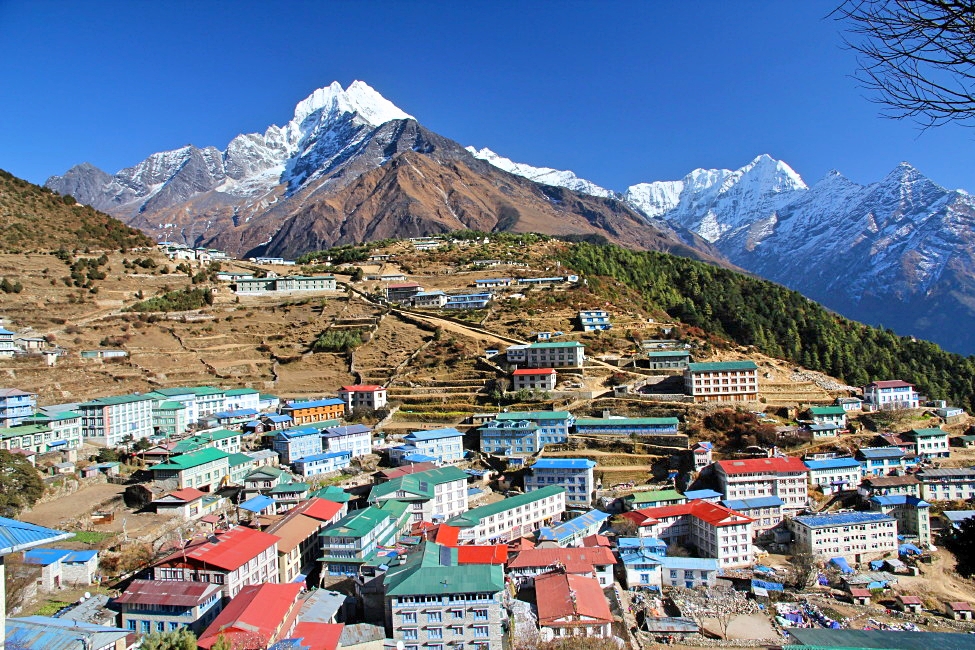
The Mountain Region ( NEPAL)


Nepal is HEAVEN  situated in between tow big countries  i.e  in the north(China) and in the South(India). Nepal is the only country where there is diverse climate. i.e COLD,MODERATE and HOT.

Nepal is divided into three Geographical Regions among them COLD region or Mountaain Region. 
is being discussion.....

The Mountain Region (called Parbat in Nepali) is situated at 4,000 meters or more above sea level to the north of the Hill Region. The Mountain Region constitutes the central portion of the Himalayan range originating in the Pamirs, a high altitude region of Central Asia. Its natural landscape includes Mount Everest and the other seven of the world's ten highest peaks, which are the legendary habitat of the mythical creature, the yeti, or abominable snowman. In general, the snow line occurs between 5,000 and 5,500 meters. The region is characterized by inclement climatic and rugged topographic conditions, and human habitation and economic activities are extremely limited and arduous. Indeed, the region is sparsely populated, and whatever farming activity exists is mostly confined to the low-lying valleys and the river basins, such as the upper Kali Gandaki Valley. The world Higest mountain lies in Nepal called Mt.Everest of height 8,848 sq,,.

In the early 1990s, pastoralism and trading were common economic activities among mountain dwellers. Because of their heavy dependence on herding and trading, transhumance was widely practiced. While the herders moved their goths (temporary animal shelters) in accordance with the seasonal climatic rhythms, traders also migrated seasonally between highlands and lowlands, buying and selling goods and commodities in order to generate muchneeded income and to secure food supplies.


Fore more..........

Saturday, June 9, 2018

MEET THE PEOPLE OF NEPAL


Press your hands together and say Namaste to watch the people of Nepal return your gesture with some of the largest most welcoming smiles in the world. It may seem cliche but Nepal's people are some of the most friendly you will ever encounter.  Namaste the common form of greeting each other in Nepal, means in Sanskrit "the divine in me bows to the divine in you".

Nepal is a diverse country and home to multiple religions, race, tribes, and cultures. The country with over 100 ethnic groups is litterly a melting pot of many (more then 90) languages and ethnicity. 

It's fascinating to learn how all these different groups of people adapted to their environment in their own ways. Becuase of the innaccessibilty of the mountains you can vistit people for who it seemed time stood still. Oxes plough the land, black smiths make the tools the villagers need still with hand, food is prepared Chulo's the Nepali wood oven's made of mud.  Visiting Nepali villages is like visiting an open air history museum. 

In the big cities of Nepal modern live is mixed with ancient traditions mostly visible during festivals, but who walks through the small alleys of Kathmandu or Patan where buyers and sellers of handicrafts,  spices and clothes give life to a unique city experience you will only find in Nepal its  also feels like you are thrown back in history. 

Did you know that when you meet people in Nepal they will probably ask;  "Have you had your tea?" or "Have you had your lunch?" instead of asking "How are you?". However, the primary intention is to know about your health. So, if you honestly answer that you haven't, then there is a high probability that you'll get invited to their place in the very next conversation.

Perhaps, this is the major reason, why a tourist cannot remain a tourist for a long time in Nepal. Once a tourist begins to know the place and its people, he is no longer a stranger - he is a valued guest, and guests are considered Gods in Nepal.

The best ways to meet the people of Nepal are during trekking, strolling the streets of the cities and during one of several day tours offered by local tourism operators. 

Experience to be treated as a God on you next visit to Nepal.

Monday, June 4, 2018

'Remarkable' therapy beats terminal breast cancer


The life of a woman with terminal breast cancer has been saved by a pioneering new therapy, say US researchers.

It involved pumping 90 billion cancer-killing immune cells into her body.
Judy Perkins had been given three months to live, but two years later there is no sign of cancer in her body. The team at the US National Cancer Institute says the therapy is still experimental, but could transform the treatment of all cancer. Judy - who lives in Florida - had spreading, advanced breast cancer that could not be treated with conventional therapy.

She had tennis ball-sized tumours in her liver and secondary cancers throughout her body. She told the BBC: "About a week after [the therapy] I started to feel something, I had a tumour in my chest that I could feel shrinking.

"It took another week or two for it to completely go away."

She remembers her first scan after the procedure when the medical staff "were all very excited and jumping around". It was then she was told that she was likely to be cured. Now she's filling her life with backpacking and sea kayaking and has just taken five weeks circumnavigating Florida.

Living therapy

The technology is a "living drug" made from a patient's own cells at one of the world's leading centres of cancer research. Dr Steven Rosenberg, chief of surgery at the National Cancer Institute, told the BBC: "We're talking about the most highly personalised treatment imaginable." It remains experimental and still requires considerably more testing before it can be used more widely, but this is how it works: it starts by getting to know the enemy. A patient's tumour is genetically analysed to identify the rare changes that might make the cancer visible to the immune system.

Out of the 62 genetic abnormalities in this patient, only four were potential lines of attack.

Next researchers go hunting. A patient's immune system will already be attacking the tumour, it's just losing the fight between white blood cells and cancer. The scientists screen the patient's white blood cells and extract those capable of attacking the cancer. These are then grown in huge quantities in the laboratory. Around 90 billion were injected back into the 49-year-old patient, alongside drugs to take the brakes off the immune system.

Dr Rosenberg told me: "The very mutations that cause cancer turn out to be its Achilles heel."

'Paradigm shift'

These are the results from a single patient and much larger trials will be needed to confirm the findings. The challenge so far in cancer immunotherapy is it tends to work spectacularly for some patients, but the majority do not benefit. Dr Rosenberg added: "This is highly experimental and we're just learning how to do this, but potentially it is applicable to any cancer.

"At lot of works needs to be done, but the potential exists for a paradigm shift in cancer therapy - a unique drug for every cancer patient - it is very different to any other kind of treatment."

Sunday, May 13, 2018

Nepal Teen Sandeep Lamichhane Shines Against Virat Kohli and Co on IPL Debut


Teenage cricket sensation Sandeep Lamichhane said there was more talent waiting to be discovered in Nepal after an impressive Indian Premier League debut.

Lamichhane, aged 17 and the first Nepalese player to land an IPL contract, took one wicket for 25 from his four overs opening the attack with his leg-spin for Delhi Daredevils against Royal Challengers Bangalore.

Lamichhane said after Saturday's match that his journey had just begun.

"I think these kind of leagues can help you grow your game. You have to stay busy with cricket all the time," Lamichhane told reporters.

"Just as I have got chance in IPL there are many a talent in Nepal. I am playing for Nevis Patriots (in the Caribbean Premier League) this year. The journey has started and there are lots of opportunities for players in Nepal," he said.

Lamichhane made history in the January auction for the cash-rich Twenty20 league when he was brought by Daredevils for $318,000, but has remained benched since the IPL began on April 7.

It was a proud moment for Lamichhane when Daredevils coach and former Australia captain Ricky Ponting handed him his cap and he did not disappoint.

"The most important thing is how you are learning all the time. It's been good, this one-and-a-half months," Lamichhane said.

"I learnt a lot of things. We have got an exceptional coach (Ricky Ponting) and good captain and all the players are really good."

His effort failed to lift Delhi to a win at their home Feroz Shah Kotla Stadium and their ninth loss in 12 matches meant they were eliminated from the play-off race, bottom of the eight-team table.

The Nepalese teenager trained at Michael Clarke's cricket academy in Sydney after he was spotted by the former Australia captain at the Hong Kong T20 Blitz in 2016.

Lamichhane, who trapped Bangalore opener Parthiv Patel leg before for his first IPL wicket, said Clarke was closely following his cricketing career.

"We were so close during the IPL season. We spoke to each other and he was saying that you have done so well today," he said on Saturday.

"Still I am a bit upset because the most important thing is a team win and if your team is not winning you must be upset."

He also had a message for his fans back home.

"It all depends on how much you are working hard for all these moments. Most important thing is to be honest with yourself, stay focused, be positive everything will be yours one day..https://www.youtube.com/watch?v=4YTpXmqIrKo&t=24sNepal Teen Sandeep Lamichhane Shines Against Virat Kohli and Co on IPL Debut

Tuesday, May 1, 2018

Top 5 Richest People of Nepal (शीर्ष 5 नेपाली सबैभन्दा धनी मान्छे ) |

Nepal is a small country with GDP of $19 billion but We often hear people in Nepal saying “Government here is poor not the people”. Many Nepalese have made their fortune by going abroad and investing in several business. In fact, most of the people here have now taken citizenship of foreign country. We have listed out some of the richest people who are currently Nepali and some have already thrown Nepali citizenship for foreign country.

1. Binod Chaudhary 

Binod Chaudhary
 Binod Chaudhary tops the list of richest people in Nepal with net worth over $1 billion. He came into limelight after getting listed in Forbes list in 2013. He is officially the first billionaire from Nepal. He is the CEO of CG group of Nepal. Wai Wai is the most famous product of CG. He runs a blog to share his experiences and also have published his autobiography.

2. Upendra Mahato

 Upendra Mahato is another business man based on Russia. He is former president of Non Resident Nepali. His net worth is estimated somewhere between $250 million to $1 billion. He has invested in sectors like heavy machineries, real estate and also in Ncell and Sanima bank of Nepal. He also owns a famous TV factory in Russia.


3. Shesh Ghale & Jamuna Gurung 


 Shesh Ghale and Jamuna Gurung are two duos from Lamjung, Nepal. They are CEO and MD of famous Melbourne Institue of Technology located at Melbourne Austraila. Shesh Ghale is ranked 166th richest people of Austraila and Jamuna Gurung is ranked 11th richest women of Austraila. Their total net worth is over $265 million.

4. Aditya Jha 

Aditya Jha is Canadian software engineer 
 Aditya Jha is Canadian software engineer with Nepali origin. He runs software company in Canada.
He is also involved in one laptop one child project in Nepal. His net worth is over $100 million.


5. Balaram Chainrai

Balaram Chainrai is HongKong based businessman. He is the former owner of Portsmouth Football Club. He mainly works with electronics and real estate sector. His net worth is unknown but near to a hundred million dollars.